Introduction
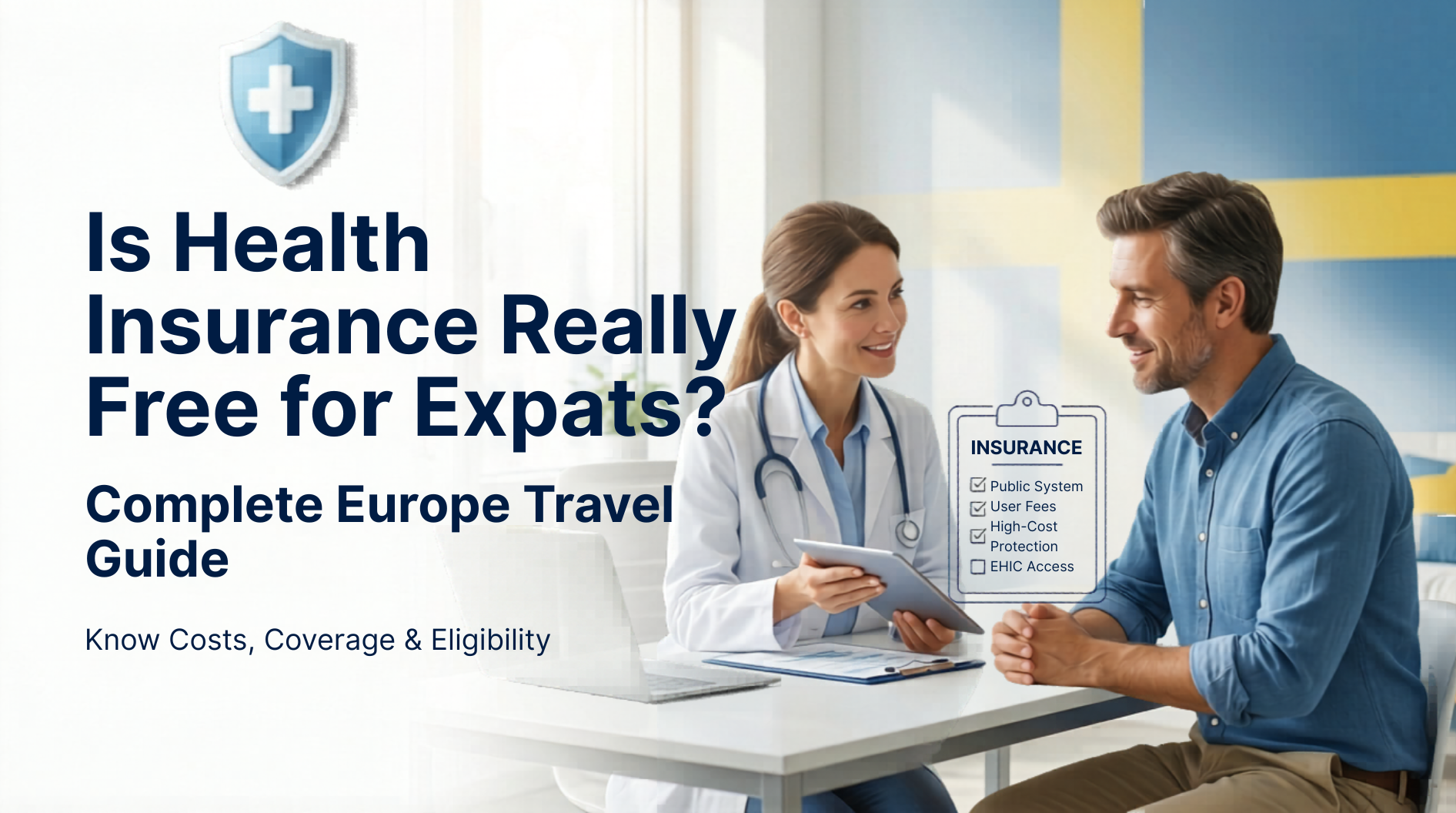
Sweden is often praised for its world-class healthcare system, frequently described as “free healthcare.” However, this can be misleading—especially for expats who are unfamiliar with how the system actually works.
In reality, Sweden offers a tax-funded healthcare system that significantly reduces medical costs, but it is not entirely free. Patients still pay small fees, although strict cost limits make healthcare highly affordable.
This guide provides a complete breakdown of Sweden’s healthcare system, eligibility rules, costs, and whether expats need private health insurance.
Is Healthcare Free in Sweden?
The Reality
Healthcare in Sweden is not 100% free, but it is heavily subsidized by the government.
How the System Works
Sweden uses a publicly funded model where residents contribute through taxes. In return, they pay only minimal fees when accessing healthcare services.
Key Highlights:
- Government covers most medical expenses
- Patients pay small consultation fees
- Annual caps limit total healthcare spending
Overview of Sweden’s Healthcare System
1. Public Healthcare (Universal Coverage)
Healthcare services are managed at the regional level and funded through taxes.
Services Covered:
- General doctor visits
- Hospital treatment
- Emergency care
- Maternity services
2. Patient Fees (User Charges)
Even though healthcare is subsidized, patients contribute small amounts.
Typical Costs:
- General doctor visit: 100 – 300 SEK
- Specialist consultation: 200 – 400 SEK
- Hospital stay: approx. 100 SEK per day
3. Annual Spending Limit
Sweden has a built-in financial protection system.
Healthcare Cost Cap:
- Around 1,300 SEK per year
- After reaching this limit, further treatment is free for the rest of the year
Who Can Access Public Healthcare?
Swedish Residents
Anyone with a personal identity number (Personnummer) gets full access to the public system.
EU/EEA Citizens
Visitors from the EU/EEA can use the European Health Insurance Card (EHIC) for necessary treatments.
Non-EU Expats
Eligibility depends on:
- Length of stay
- Work or residence permit status
Do Expats Need Health Insurance?
Short-Term Stay (Less Than 1 Year)
If you are in Sweden temporarily:
- Public healthcare access is limited
- Private or travel insurance is required
Long-Term Stay (More Than 1 Year)
If you are staying long-term:
- You can access public healthcare
- Costs become significantly lower
Private Health Insurance in Sweden
Why Consider Private Coverage?
Although public healthcare is high quality, private insurance provides additional benefits:
- Faster appointments
- Reduced waiting times
- Access to private hospitals
What Does It Cover?
- Specialist consultations
- Advanced treatments
- Private hospital rooms
Cost of Private Health Insurance
| Plan Type | Monthly Cost (SEK) |
| Basic Plan | 300 – 700 |
| Standard Plan | 700 – 1,200 |
| Premium Plan | 1,200 – 2,500 |
Top Private Health Insurance Providers in Sweden
1. Länsförsäkringar
A well-established local insurer offering flexible plans and strong customer support.
2. Folksam
Known for affordable pricing and transparent policies.
3. If Insurance
A leading Nordic company with wide coverage and easy online services.
4. Trygg-Hansa
Offers comprehensive plans with fast claim processing and 24/7 assistance.
Key Advantages of Sweden’s Healthcare System
Affordable Treatment
Medical costs are significantly lower compared to many countries.
High Standards of Care
Modern facilities and well-trained healthcare professionals ensure quality treatment.
Cost Protection
Annual spending caps prevent excessive medical expenses.
Common Healthcare Services in Sweden
Primary Care (Vårdcentral)
Your first contact point for general health issues.
Specialist Care
Requires referral from a general practitioner.
Emergency Services
Available 24/7 with minimal charges.
How to Access Healthcare in Sweden
Step 1: Obtain Personnummer
Register with Swedish authorities to receive your personal identity number.
Step 2: Choose a Local Clinic
Sign up with a nearby healthcare center.
Step 3: Book Appointments
Appointments can be booked online or via phone.
Health Insurance for Students
EU Students
Can access healthcare using the EHIC card.
Non-EU Students
Must arrange private health insurance before arrival.
Common Mistakes Expats Should Avoid
- Assuming healthcare is completely free
- Skipping private insurance for short stays
- Underestimating waiting times in public healthcare
Practical Tips for Expats
- Register for your Personnummer early
- Keep private insurance as a backup
- Monitor your expenses to benefit from the annual cap
Future Trends in Swedish Healthcare
- Expansion of digital healthcare services
- Online doctor consultations
- Improved accessibility for international residents
These innovations are making healthcare more efficient and user-friendly.
Conclusion
Sweden’s healthcare system is not entirely free, but it offers high-quality, affordable medical care supported by government funding. While residents benefit from low costs and annual caps, private insurance can enhance the experience by providing faster access and additional services.
For expats, understanding eligibility and choosing the right coverage—public, private, or both—is essential for a smooth healthcare experience in Sweden.
FAQs
Q1: Is healthcare completely free in Sweden?
No, it is subsidized but includes small user fees.
Q2: Do expats need private insurance?
Yes, especially for short-term stays.
Q3: What is the annual healthcare cost limit?
Around 1,300 SEK per year.
Q4: Can foreigners use Sweden’s healthcare system?
Yes, depending on residency and eligibility.